
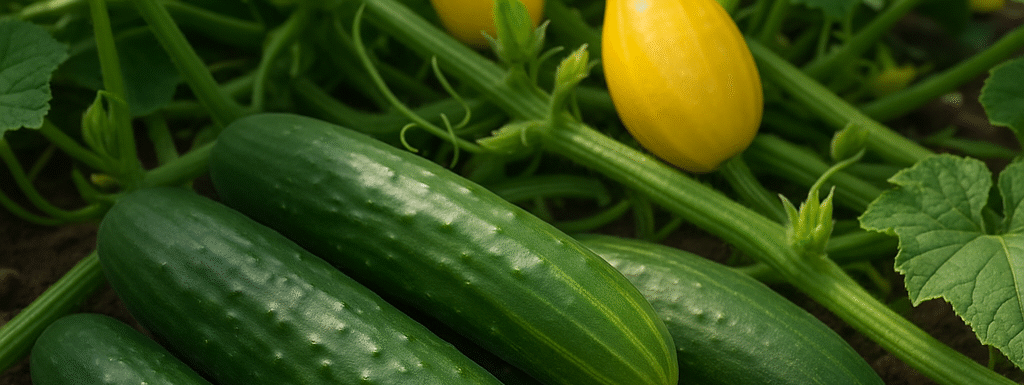
Most of us pick up a cucumber or zucchini at the grocery store without giving much thought to how it got there. But behind every seed packet and every vegetable variety is years, sometimes decades, of careful work by plant breeders. In this episode of the Stealth Wellness Podcast, Dr. Bill sits down with Gary Taurick, PhD, a veteran plant breeder whose career spans from home gardens to international markets.
Meeting by Chance, Learning by Design
The conversation started with a chance encounter at a small-town Michigan beach. Dr. Bill was wearing a Baker Creek heirloom seeds shirt and Gary had on a Seed Savers Exchange hat. That spark led to a rich discussion of Gary’s decades-long career in plant breeding, from his early days in Hawaii to his PhD at Cornell and professional work with companies like Ferry Morse, Harris Moran, and Clause8.18.25 Gary Taurick.
What Plant Breeders Actually Do
Gary explains that breeding is not a quick process. Developing a new variety of cucumber or squash can take 8 to 10 years of hand pollination, disease testing, and field trials before it ever reaches a gardener’s soil. Breeders create hybrids, crosses between two parent plants, that companies can sell exclusively. This protects the variety and ensures growers have access to vegetables with desirable traits like higher yields, better disease resistance, or improved taste8.18.25 Gary Taurick.
Cucumbers: More Than Just Salad
Gary specialized in cucumbers and summer squash, including Middle Eastern varieties called Beit Alpha cucumbers, which are naturally bitter free and crisp with thin skins. These quickly became his personal favorite and remain his go-to for home gardening. He notes the stark difference between cultural preferences: thick-skinned slicers in the U.S., thin-skinned pickling cucumbers for brining, and tender Middle Eastern cucumbers eaten fresh at nearly every meal8.18.25 Gary Taurick.
Lessons for Gardeners and Homesteaders
For listeners who love to grow their own food, Gary shares practical advice:
- Experiment freely – Don’t be afraid to try new or unusual varieties
- Compost is gold – His decades-long gardening success comes from a rich compost system without pesticides
- Field grown beats greenhouse flavor – Soil-grown crops often taste better because of natural microbial activity and a broader spectrum of micronutrients
- Heirlooms still matter – While hybrids dominate, classic varieties like Straight Eight cucumbers remain popular among home gardeners and can perform well in backyard plots8.18.25 Gary Taurick
Why This Matters
From health-conscious families to homesteaders and market gardeners, Gary’s insights show how much unseen work goes into the vegetables we eat. As Dr. Bill points out, cucumbers alone support hydration, skin health, and even freshen breath, but none of that would be possible without the breeders ensuring quality seeds reach our hands.
Gary’s career illustrates both the art and science of plant breeding, a blend of genetics, patience, and passion for food. His story reminds us that every seed has a history, and every harvest is part of a much larger cycle of care, knowledge, and innovation.
Listen to the full episode to hear Gary’s stories from the field, his take on heirloom vs. hybrid seeds, and what today’s gardeners can learn from decades in commercial plant breeding.